


(Repertório)
ChatGPT reads about 36 pages before recommending a business, and only 15% make the answer
A study of 15,000 questions shows which pages ChatGPT reads and which it actually cites. The ones that get in rank on Google and answer, in plain text, what a customer would ask at the counter.

Mateus CremonDesigner, Cremon Studio · 3 min read
Someone opens ChatGPT and asks which bakery near them takes custom cake orders. Before it answers, it reads about 36 pages on average. Only a few of them show up in the answer.

That comes from AirOps, which published a study in March 2026 based on 15,000 questions asked to ChatGPT. To answer them, it read 548,534 pages. Only 15% of those pages ended up cited. The rest were read and left out.
And more people are asking. In Brazil, a September 2026 survey by Fbiz and On The Go found that 8 in 10 respondents already used some kind of AI in their daily lives, and 46% of AI users ask it before they buy a product or hire a service. The sample was 1,200 people aged 16 and up.
One question turns into several searches
ChatGPT breaks the question into pieces and searches each one. In the study, almost 9 in 10 questions led to at least two extra searches.
For the bakery question, those searches could be "birthday cake prices," "bakery that delivers on Saturday," and "bakery reviews near me." That example is mine, just to show the idea.
And 95% of those extra searches have zero search volume. Nobody types them into Google. People don't search like that. Only AI does.
For a small business, that opens a door. Among the cited pages that ranked somewhere in a Google top 20, a third showed up only in those extra searches. So the page that answers the details (the price, the lead time, whether they deliver on Saturday) can make it into the answer without ranking first on Google.
Google still matters a lot
Google still counts, though. In the same study, pages ranking first on Google were cited 3.5 times more often than pages sitting around page three.
One caveat. AirOps sells an AI monitoring tool, and the study shows what tends to go along with getting cited, without proving one thing causes the other. Still, it makes sense to me. If the AI searches before it answers, whatever already ranks well gets a head start.
The good-looking site the bot can't read
Now the part for whoever builds websites. A lot of sites only assemble their text when the page opens in the browser, using JavaScript. Visitors see everything. A bot that doesn't run that code gets a page that's almost empty.
In December 2024, Vercel and MERJ looked at AI crawlers and found that the major ones didn't run JavaScript. That included all three from OpenAI: GPTBot, OAI-SearchBot, and ChatGPT-User. The exceptions were Gemini, which uses Google's crawler, and Apple's bot. For those OpenAI bots, anything that wasn't already written into the page didn't exist.
One developer reported that, since September 25, 2026, OpenAI's bots have started running JavaScript on some sites. But that's one person's account, and OpenAI hasn't announced anything. I wouldn't let a client's site depend on it.
What a customer would ask at the counter
The sites that make the 15% answer what a customer would ask at the counter. Price, lead time, delivery, location. Written on the page, as text, not baked into an image, on a site that shows up on Google.
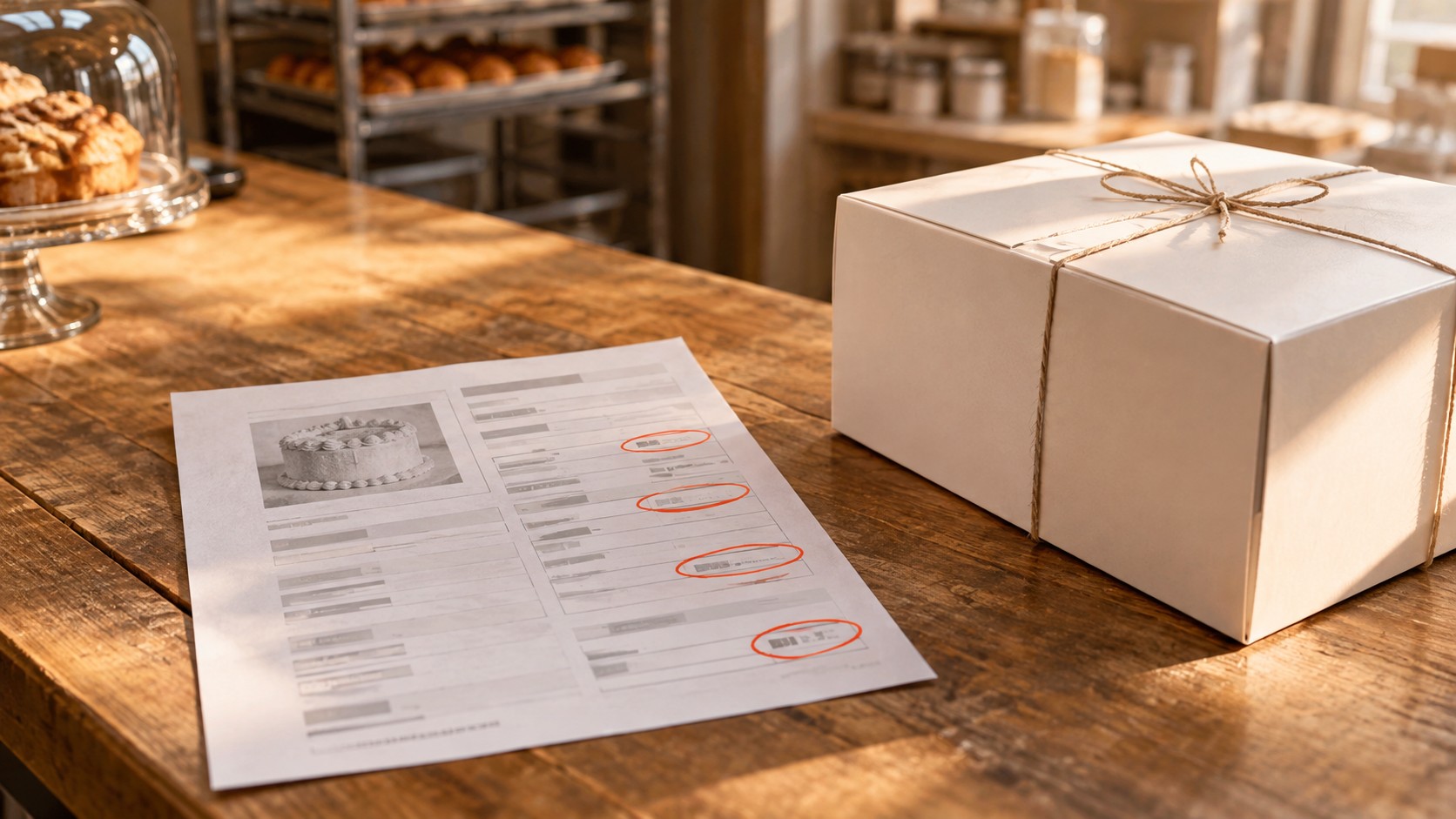
For the bakery, that means the custom cake page says how much it costs, how long it takes, whether they deliver on Saturday, and where the shop is.
If you run a business, ask whoever built your site whether the text shows up for a bot that only reads what's written.
If it doesn't, your site is blank to that bot.