

(Opinion)
AI learned to read X‑rays, and the US still needs more radiologists
In 2016, Geoffrey Hinton said AI would read scans better than radiologists. Now US hospitals are short on them, and the reason applies to designers too.

Mateus CremonDesigner, Cremon Studio · 3 min read
In 2016, on a stage in Toronto, Geoffrey Hinton said people should stop training radiologists now. Within five years, he said, AI would read scans better than they could.

In that same talk, he compared radiologists to the cartoon coyote who's already run off the edge of the cliff and hasn't looked down yet. In 2024, Hinton won the Nobel Prize in Physics for his pioneering research in AI.
AI really did show up
Today the FDA has cleared more than 700 AI models for radiology. Mayo Clinic alone uses more than 250.
But radiologists didn't disappear. Mayo's radiology staff has grown 55% since Hinton's prediction. In 2025, US radiology residency programs offered 1,208 positions, the most ever, and hospitals are still short on radiologists. Their average pay is now over $500,000 a year.
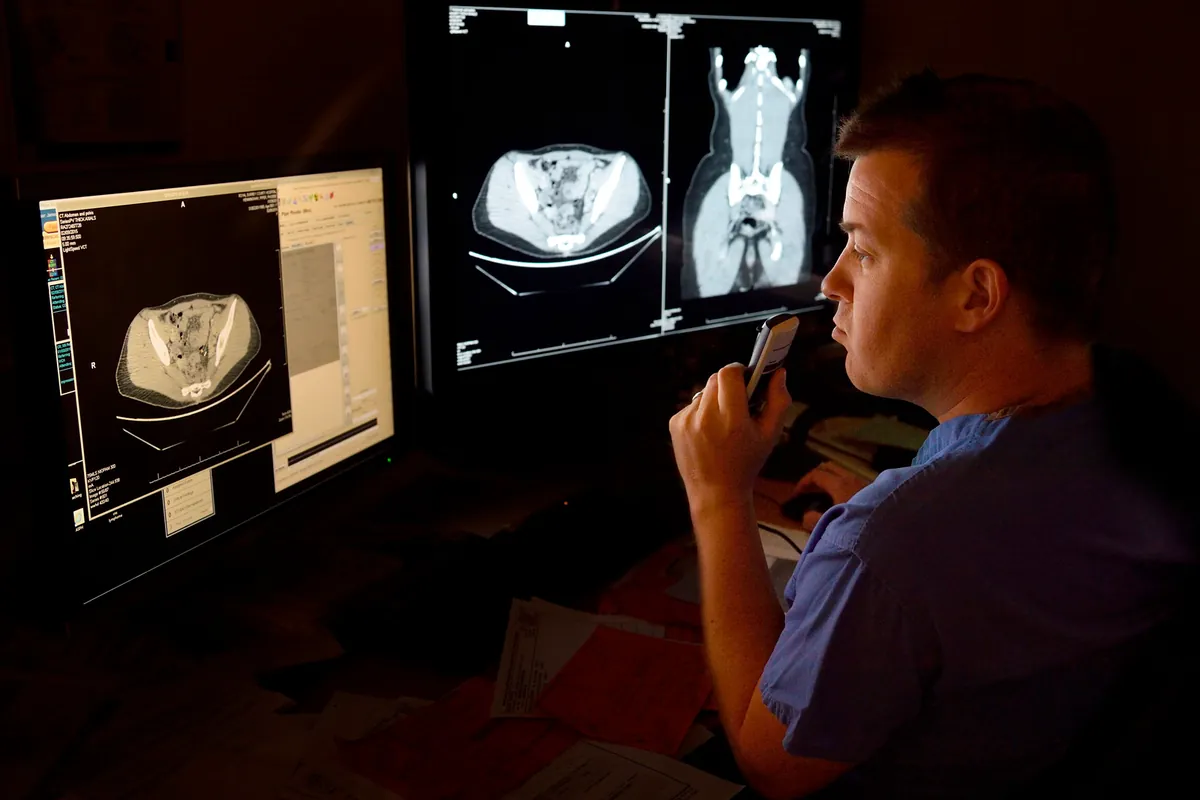 Photo: Ashley Prytherch, Royal Surrey County Hospital/Wellcome Collection (CC BY 4.0).
Years later, Hinton himself said he got the timing wrong, not the direction.
The other 64%
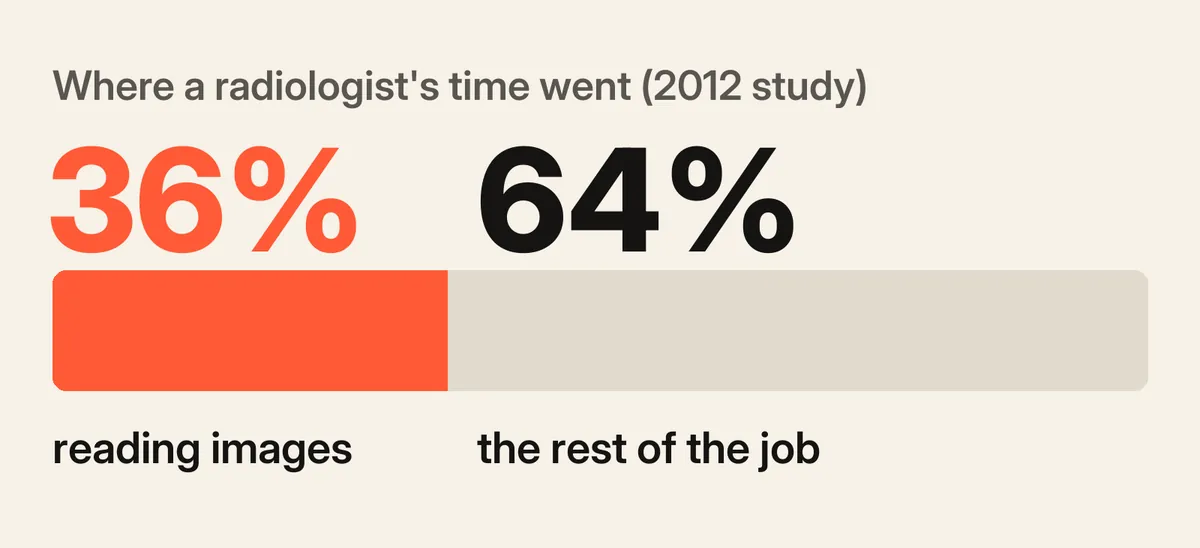
The prediction only looked at one part of the job. In a 2012 study, radiologists spent 36% of their time reading images. The rest went to overseeing exams, explaining results to other doctors and sometimes to patients, teaching residents and techs, and reviewing exam orders.
And faster exams turned into more exams. In the early 2000s, X-rays moved off film and onto computers, and each radiologist could handle far more images. Doctors started ordering more imaging, and use went up 60% from 2000 to 2008.
An English economist saw this coming in 1865. William Stanley Jevons noticed that more efficient steam engines made England burn more coal, not less. When something gets cheap, we use a lot more of it. It became known as the Jevons paradox.
Much of this story comes from an essay by Deena Mousa, published in 2025 in Works in Progress magazine.
The part everyone sees
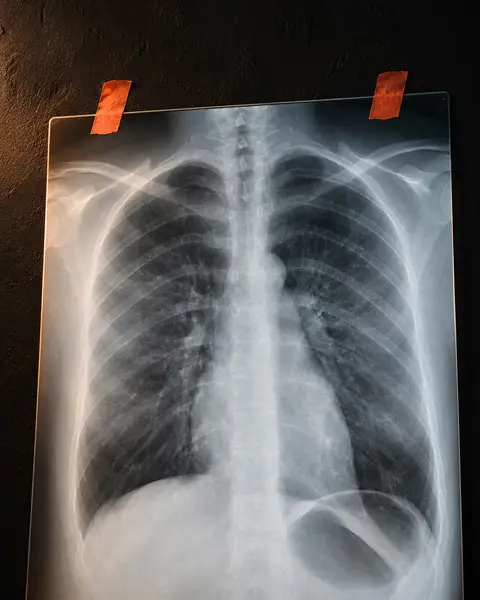
In design, the part AI does fast is the artwork itself, like the post graphic, the banner, or the screen. It's the part everyone sees, like the image on the scan.
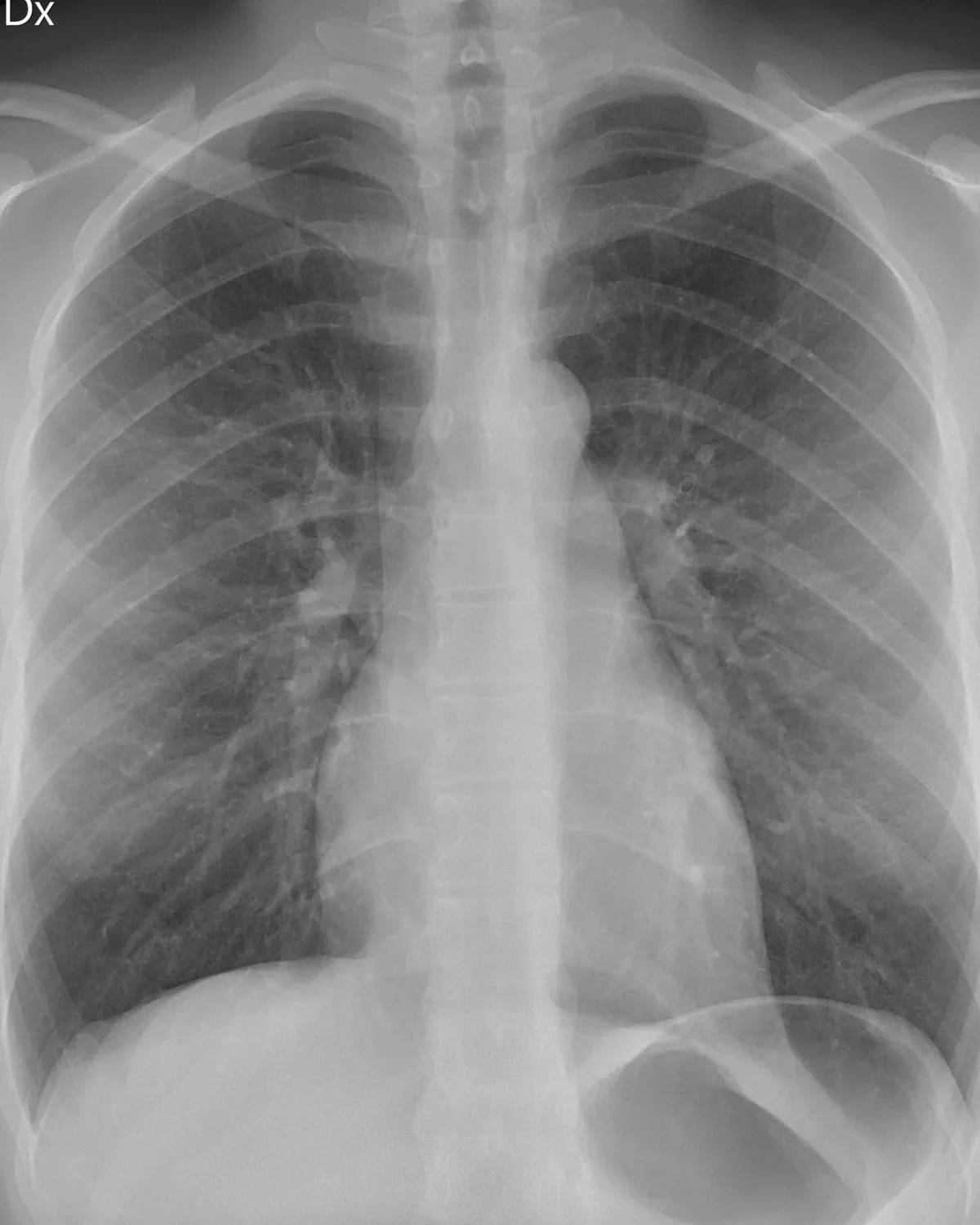 Image: Mikael Häggström/Wikimedia Commons (CC0).
People who use Canva's AI make 3 times as many designs, and on Upwork each creative production contract got 13% cheaper. The money moved to bigger projects. On Fiverr, clients booking design projects over $1,000 went up 25% in a year.
Not every designer comes out ahead. The Bureau of Labor Statistics projects 2% fewer graphic designers in the US from 2025 to 2035.
The rest of the job
The designer's job was never just the artwork. Before it, someone has to talk with whoever asked for it, figure out what needs to be said, to whom, and in what order, and decide what gets left out.
So instead of quoting 10 graphics, quote what they need to solve. The graphics come out of that, and the part AI can't do shows up in the price.
I got into design when I was about 14, making graphics in Photoshop, and the artwork is still what people see of my work. It just comes out of those decisions. They're the creator's touch and expertise, and AI doesn't have that, because it isn't human.